
Do you know why we smell a strange smell in our hands when we touch the coins? There is a very specific reason and now we are going to see it below.

Surely you have noticed that when you hold the coins in your hand then it has a strange smell. It is known that coins are a mix of germs and in fact you should wash your hands every time you touch them. They pass from hand to hand and for this reason they are not a very hygienic object.
It is always recommended to sanitize your hands and if possible wash them with soap and water. In this way, however, we will get rid of germs. The stench that is created will also go away but you should know that it is not the smell that coins normally have. In fact, the reason is very different from what you imagine.
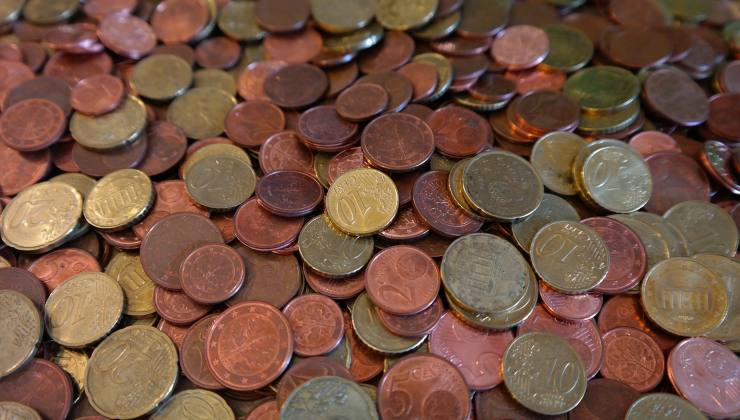
The coins, whether they are 5 cents or 10 or 20 cents but also 1 or 2 euros, leave a smell that does not depend on them. In fact, if you take them with gloves you will see that your hands would not have that strange smell. But let’s see below the real reason for this smell that makes your hands smell.
What’s that weird smell when you touch the coins
As we have said, it is not the coins that stink. However, what makes our hands smell after touching them is a particular chemical reaction. It is a reaction that takes place between the skin and the metal. Their contact causes this bad smell emanating from the skin to be created.
Metal doesn’t have that smell but it’s just the chemical reaction that occurs after rubbing. In practice, the metal affects some moisturizing substances of the skin and so the skin actually adds electrons to the atoms of the metal. That’s where that strange smell comes from.
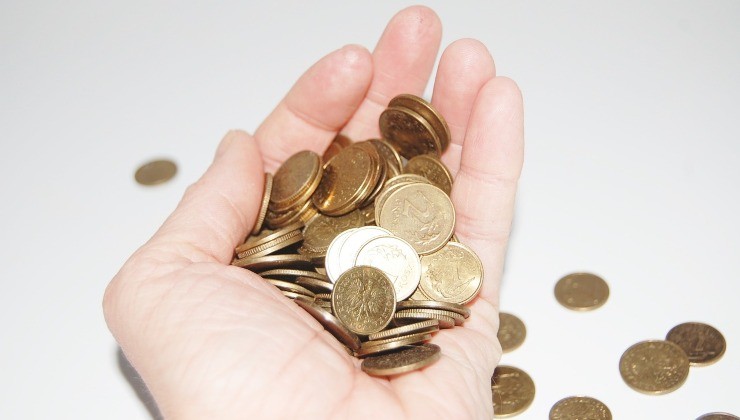
The atoms of the metal create a reaction with the secretions of the epidermis. The metal thus takes on a negative charge. And negativity generates a molecule that has an unpleasant odor. It is called fungal aroma (1-obtain-3-ol). It is this therefore that leaves the smell on the hands and not the coins.
We have therefore understood that coins do not smell by their nature. This is only a consequence and moreover the older the coins the stronger this smell is. It is therefore not as many people think, that it is precisely the coins that have this smell that comes from the metal material.
The bacteria contained on money
As we have already said at the beginning, in addition to having to wash your hands for the smell that the coins create, you should always do it after touching the money. In general, whether they are coins or banknotes, they contain a very high number of bacteria and germs. There are several studies on the subject.

According to a study by the University of Oxford, the most contaminated currency in the world is the Danish krone. This contains 40,000 bacteria. It is followed by the Swiss franc which contains as many as 32,000 bacteria. The euro, on the other hand, is almost clean with its 11,000 bacteria. So remember to always wash your hands after touching the money.


