
People have been using natural fertilizers for centuries to produce bigger, stronger, and most importantly, cleaner crops.
So, here are the 7 best organic fertilizers you can make at home.
Coffee beans
Coffee beans as a natural fertilizer are one of the most famous that can be obtained at home.
They are acidic, which promotes the growth of acetic acid bacteria in the soil. They also contain 2% nitrogen and other micro and macro elements.
The best way to use coffee beans is to mix them with the soil so that the roots have direct contact with it. Coffee beans also maintain the acidity of the soil, which is very beneficial.
Another way to make fertilizer for coffee is to grind it and put it in water where it will sit for 24 hours and become a nutrient-packed mixture. This mixture can be used as an organic acid reducer and growth accelerator.
The exact amounts have not been established, so you can simply use it “by eye”, as there is no “overdose” in this mixture.
Ash

Ideal auxiliary fertilizer in the last stage of flowering. It is rich in potassium and phosphorus. It is also used as a means of increasing vegetation. Ash is effective in controlling insects.
The best way to make this fertilizer is by making an infusion of it. To do this, simply take the ash, immerse it in water, leave it for 24 hours and the auxiliary fertilizer will be ready for late flowering. The exact amount is unknown as it is used as an auxiliary fertilizer.
Banana infusion
Bananas are known for their high potassium content. Potassium is the most important element for plant growth. Sugar, starch, and carbohydrates also help the plant.
Potassium also plays an important role in the biosynthesis of terpene-related proteins, the absorption of water from the roots, and the closure of stomata. (Stomata are pores on a leaf through which a plant receives or releases water.)
To make banana infusion, take 3 banana peels, put them in 1 liter of water, add 1 teaspoon of sugar and boil. When it is cold, remove the husk and the fertilizer will be ready for the entire plant cycle.
The results showed that applying this fertilizer during the last 6 weeks of flowering increased the thickness of the flowers by about 20%.
Nettle infusion
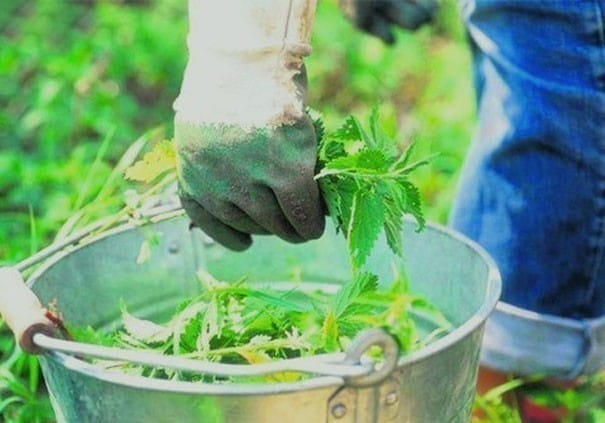
Nettle infusion is more than just a fertilizer. It is also used to control various pests as it is rich in organic nitrogen and other beneficial minerals as fertilizer.
It is used as food from the leaves and is prepared according to the same principle as bananas. Simply boil, cool, squeeze and you’re done.
brewer’s yeast
They are commonly used as food, but due to their high levels of minerals, amino acids, and proteins, they are also used successfully in horticulture. Not to be confused with normal yeast.
How to obtain useful fertilizers for plants from them? Very easy!
Simply dissolve 1 teaspoon of brewer’s yeast in 1 liter of water.
It is best to use them during the flowering phase, as they are rich in phosphorus and potassium.
Eggshell
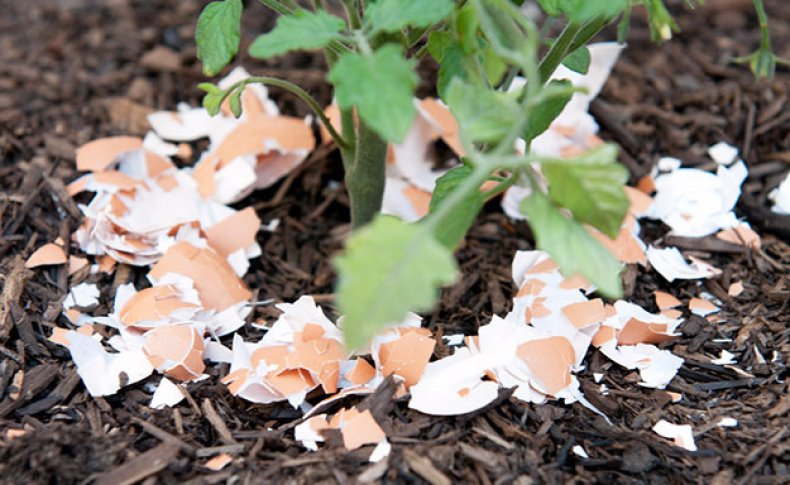
The separate fertilizer is not made from eggshells. The husks should be added to other homemade organic fertilizers to ensure that the plant receives enough calcium.
Calcium deficiency is uncommon, but to be safe, it’s best to mix the husks with any fertilizer you make at home. But you can also mix it directly with the soil.
Lentil and bean infusion
Auxins are a much-needed group of phytohormones. They control cell growth and phototropism (the movement of plant leaves or stems in search of light) causes vertical growth of branches due to the elongation of cells.
Auxins are traditionally used in the form of a gel that is applied to branches to stimulate the roots. One of the most famous is “Clonex”, a synthetic form of auxins that works well in this form, although this phytohormone is also found in organic matter such as algae and some cereals.
To make an infusion, dip lentils or beans, or both, in water. Let it rest for 24 hours, then heat a little and squeeze. Plants will easily overcome the stress caused by transplanting or damage to other roots


