
Do you have really yellowish cushions and don’t know how to make them flawless without going through the washing machine? Here’s how to do it.
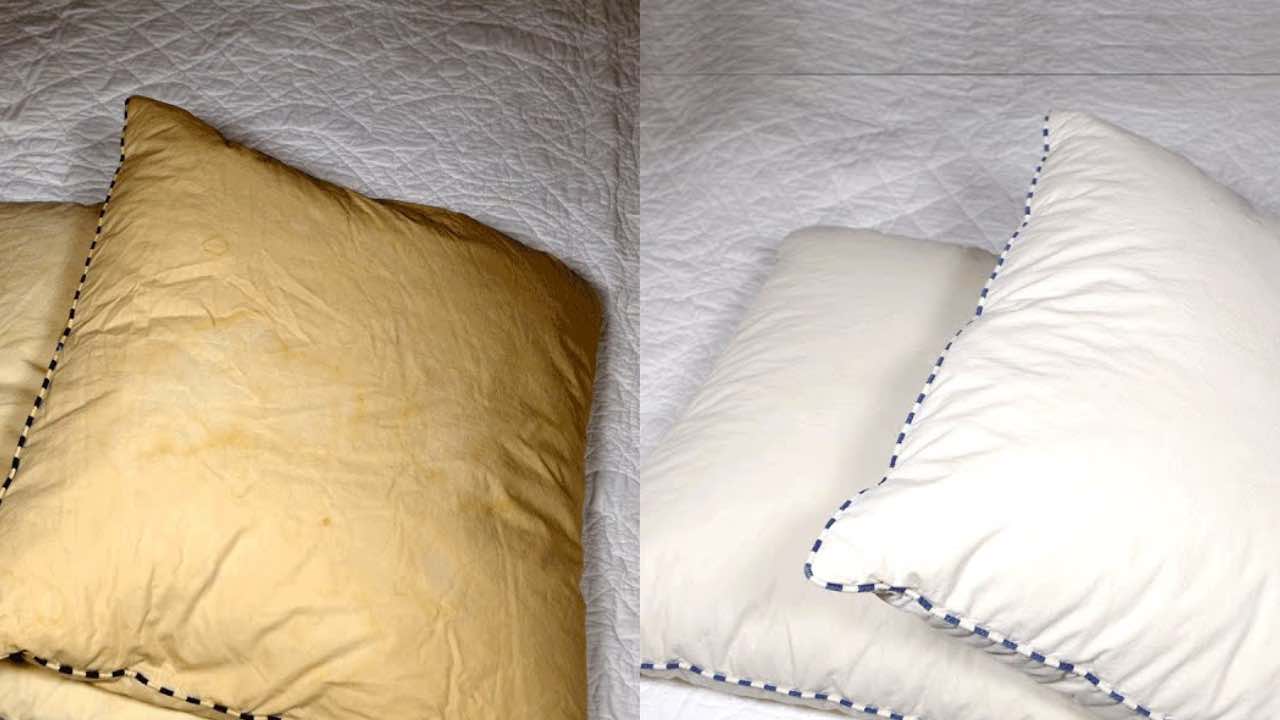
Now we’re going to walk you through a really amazing method that will help you whiten your pillows. We are talking about a practice used by the best stain removers.
Why do cushions turn yellow?
There are many reasons why your pillows may turn yellow. The first reason is undoubtedly the accumulation of natural oils. We are talking about those that produce skin and hair during sleep hours.
Direct sun exposure can also cause cushions made of fabrics such as cotton to turn yellow and discolor. We advise you to avoid it. Even excessive moisture can cause mold to grow on the cushions, causing the fabric to turn yellow.
Not everyone knows this, but even inhaling cigarette smoke can leave traces of nicotine on your pillows, causing the fabric to turn yellow.
It may seem counterintuitive, but if you wash your cushions frequently, using detergents or perfumes that contain chlorine or other chemicals can cause them to turn yellow. And finally, of course, prolonged use of a pillow can lead to a loss of elasticity and yellowing of the fabric.
We have to accept that our pillows also have a life and that after a while, they have to be thrown away. If you think that the time has not yet come for yours, however, we advise you to follow this method that we illustrate below, which we are sure will help you to whiten them.
Blanch them with this method
How many times have you noticed that your pillows are yellowing and you don’t know how to bleach them?
To wash the cushions safely, gently and above all dry, we recommend using an ingredient that you surely have at home: we are talking about hydrogen peroxide.
What you need to do is check the label on the pillow to see if it says you shouldn’t wash with this substance at all. In fact, some types of pillows, such as those made from goose down, can be damaged if washed with hydrogen peroxide.
All you have to do now is mix 1 cup of 3% hydrogen peroxide with 1 cup of warm water in a bowl. Then dip a sponge and begin gently massaging the pillow so that the solution penetrates the fiber.
You can also decide to submerge the pillow in water, but we don’t recommend doing this if you want to do this procedure dry.
Now wipe the cushion with a dry cloth and let it air dry, perhaps in a shady spot, thus avoiding exposing it to direct sunlight or putting it in the dryer to avoid damaging the original shape of the cushion.
It’s important to note that hydrogen peroxide can discolor some fabrics, so we recommend that you test only a portion of the cushion first before using it on the entire surface.
We also remind you that hydrogen peroxide loses its effectiveness over time and therefore it would be best to always use a fresh solution to achieve optimal results.


