
Many people wonder from which animal tripe derives, one of the most popular foods in many regions of Italy.
With the arrival of the summer months and higher temperatures, we tend to prefer a diet characterized by lighter and fresher foods. This is the period when many love to consume fruit and vegetables, indulging in other delicacies such as caprese, rice salad and so on. However, even when the thermometer largely exceeds 30 degrees, someone still decides to throw themselves on some decidedly heavier and not exactly summer dish. Among these there is certainly tripe, an offal that was already consumed by the Greeks and Romans and that is still often used in gastronomy today.
Which animal does tripe come from: the whole truth
In many areas of Italy, tripe is one of the most popular dishes and we obviously find it in many variations, all very tasty. Tripe is not obtained from the intestine of the bovine, as many might be led to think, but from the stomach of the animal.
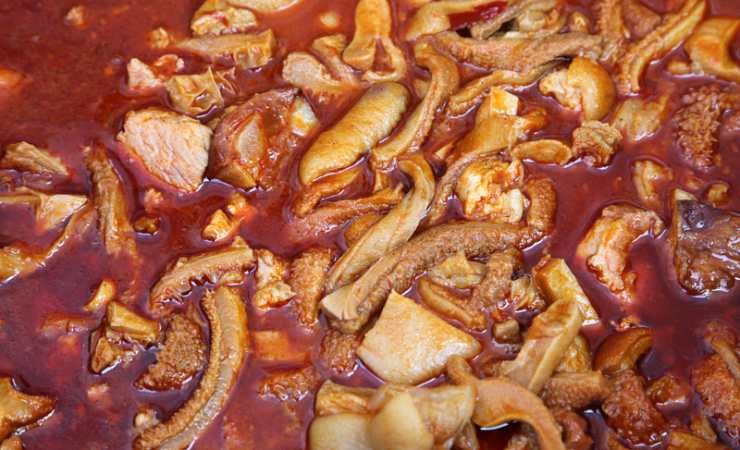
In Lazio, Tuscany and Lombardy, tripe is a very popular food: in these regions it is cut into strips and cooked. As mentioned above, it is a dish that is eaten during the winter season, but there are those who also love to eat it in summer.
What animal does tripe come from? Many people ask themselves this question, especially if they don’t know this dish well and perhaps haven’t been able to taste it even once. Well, in addition to beef, tripe can also be obtained from the entrails of two other animals, namely pork and lamb.
Enjoying a nice plate of tripe every now and then is undoubtedly a great way to receive great nourishment. Many imagine that tripe is particularly fatty, but the reality is quite different.
If we consume 100 grams of tripe, in fact, we will guarantee our body 98 kilocalories and only 4% fat. On the contrary, tripe is a food that ensures a large number of proteins (about 15% in 100 grams), without forgetting other elements that are extremely beneficial for our body such as iron and B vitamins.
As mentioned, in Italy tripe is cooked differently depending on the region. Just to give an example, Roman-style tripe is characterized by tomato and pecorino sauce, with the addition of Roman mint famous for its particularly intense aromatic smell.
So many ways to cook it: you’ll lick your lips
Florentine tripe, strictly cooked in a pan, is also prepared with tomato sauce and parmesan, while the Piacenza variant is enjoyed stewed with sauce and white beans from Spain.
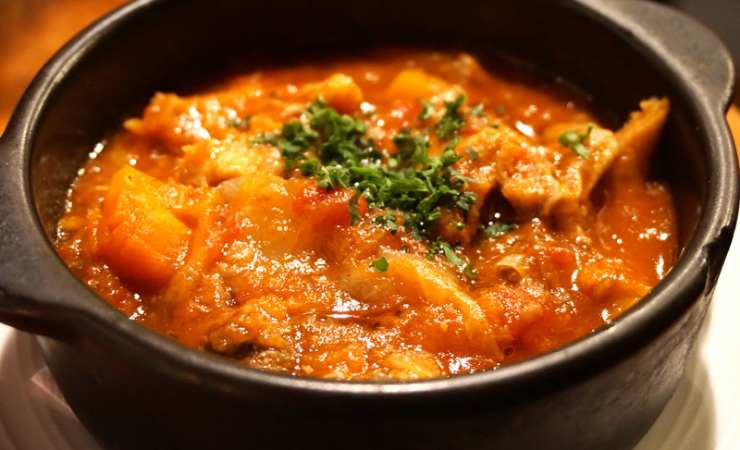
A very popular recipe is that of stewed tripe with potatoes. After carefully washing the tripe, cut it into pieces and cook it in a vegetable broth.
Once cooked, move the tripe to a pan where we will sauté it with butter, carrots, celery and onions. During cooking we can add a little white wine and vegetable broth.
The final step is to transfer the dish to a pot and boil it over low heat in a mix of vegetable broth and tomato sauce. All that remains is to add the potatoes cut into wedges, a lemon zest and a Parmesan crust: after half an hour the stewed tripe with potatoes will be ready to be enjoyed.


