
Do you want to discover the ideal place to place your mother-in-law’s tongue, a houseplant that is very easy to care for? Here is the incredible discovery.
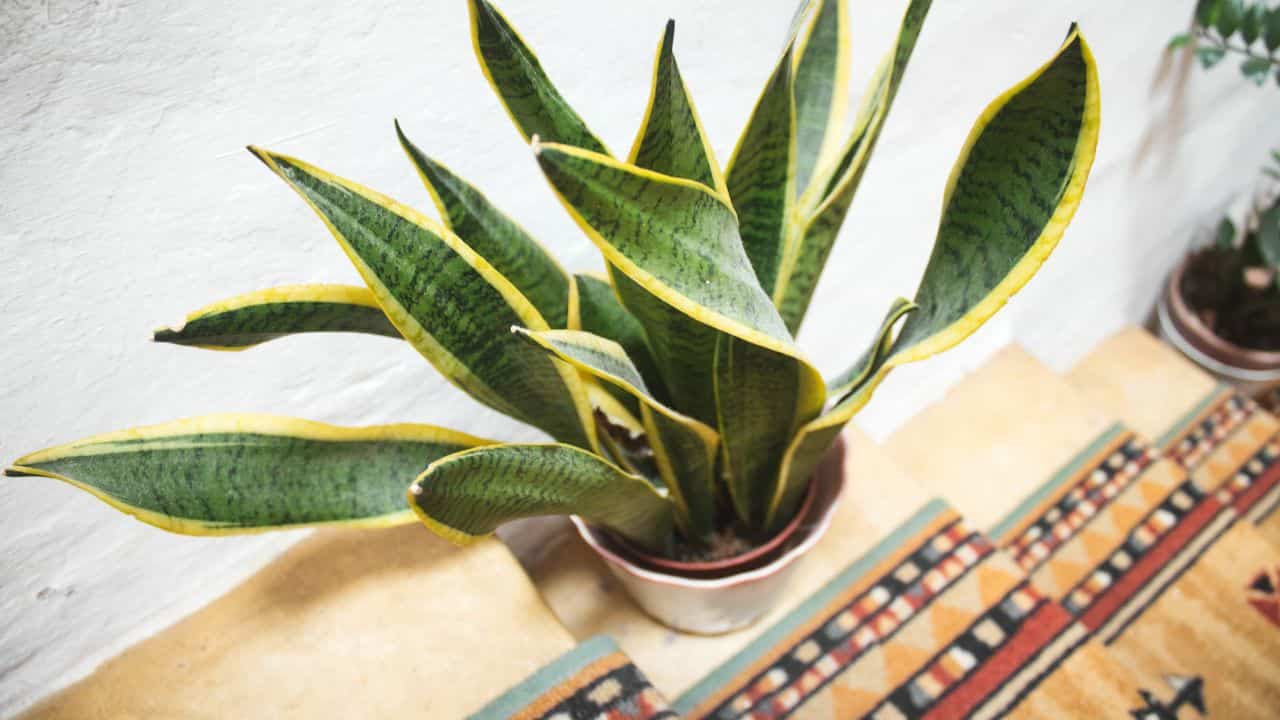
One of the most common houseplants is mother-in-law’s tongue. Despite a highly bizarre name, this plant is very easy to care for and grow best in your home environment. Those who have not yet developed a green thumb to the fullest, will choose a mother-in-law’s tongue to slowly become familiar with this world.
Not all plants need the same attention and the same precautions. Some of them, in fact, need to be permanently exposed to the sun, while others will suffer greatly from this specific situation. Another aspect to take into account, then, concerns the water to be supplied to the plants.
The general rule for healthy and luxuriant plant growth refers to the obligation of constant irrigation, especially at certain times of the year, such as spring and summer. Not all of them, however, will need the same amount of water.
Houseplants, in fact, can be watered much less frequently than those on the balcony or in the garden. A mother-in-law’s tongue, for example, will need to be watered once every 10 to 15 days. It will not need, therefore, so much water. An excessive presence of this element, on the contrary, could be counterproductive.
The risk, in fact, is that the plant may rot, due to too wet soil. Inquiring in advance about the right moves to be made in the care of individual plants, therefore, is very important. It will therefore also be for the mother-in-law’s tongue.
Below, we let you discover where to effectively place mother-in-law’s tongue in the home. In this way, it will grow healthy, strong and luxuriant. Its positioning, moreover, may also be important in other respects. Here’s everything you need to know about it.
Here’s where to place mother-in-law’s tongue in the house
A mother-in-law’s tongue will be very important to place inside your home. Its leaves, in fact, will be able to purify the air you breathe in the best possible way. So where to locate this houseplant? Let’s find out what to do to never make her suffer and to make her always beautiful and majestic. Here’s everything you need to know about it.

It will be advisable, first of all, to choose an area of the house that is bright enough, as long as the sun’s rays do not enter inside and touch the leaves of the plant. The mother-in-law’s tongue, also known as sansevieria, in fact, fears direct contact with the sun, but will have to grow in a bright area.
Areas of the house that are heavily subject to cold current must also be avoided. In addition to the sun’s rays, these currents can also compromise the regular growth of this houseplant.
In the winter months, then, it will be essential to keep it away from heat pumps, radiators and any lit fireplace. In fact, he will suffer a lot from this “artificial” heat.
In addition to these more “technical” details in reference to the correct positioning of the mother-in-law’s tongue, there are also other more “philosophical” reasons. Let’s find out what we are referring to. Here are the details.
Place it in this area
An ancient Chinese Taoist geomantic art, called Feng Shui, emphasizes how the mother-in-law’s tongue can be really important to remove negative energy from the house. Placing this plant at the entrance of the house, therefore, could be an invitation to keep away the negative vibrations that come from outside due to various vicissitudes.

A sort of protection against everything negative outside your home. The plant will be able to fend off these negative or tense aspects. The mother-in-law’s tongue, then, could be important to attract positive energy and money in the future.
Like most plants, therefore, it too can be seen as an element capable of influencing our lives. We don’t know if all this can really change the state of things, but it costs nothing to try!
Net of all these talks, we have made you discover the beauty of mother-in-law’s tongue, how to best care for it and where to position it effectively, avoiding risks to the health of the plant.


