
One of the most requested floors in recent years is wood or, better known, parquet, but what can you do if it lifts?
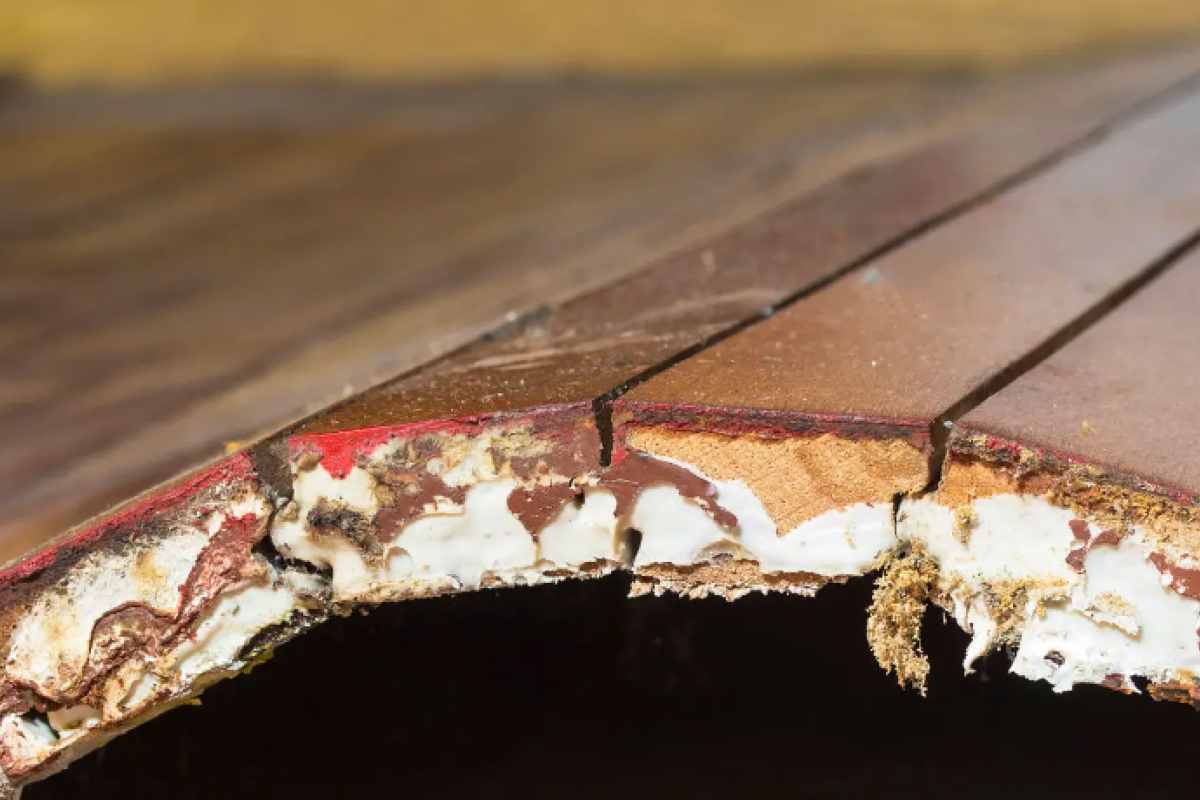
Parquet is a wooden floor assembled through slats interlocked together. The types of material range from simple pine to the more expensive teak, oak or olive wood . In recent years, many people have chosen to floor their homes with parquet.
Indeed, many of the houses under construction in recent times already include parquet flooring in their specifications. A choice, after all, that has come back into fashion , but which was the norm in ancient times .
The first wooden floors date back to 18th century France with King Louis XIV. However, there seems to be evidence that dates back to 3000 BC . The first real project, however, dates back to 1534 commissioned by King Francis I.
One of the difficulties in managing a wooden floor is that it can swell and lift if not cared for properly. If you happen to find some boards that are lifted, the first thing to do is to call a professional to help us fix it.
Vapor barrier
If it has been installed with a floating installation then it may be missing the intermediate layer called vapor barrier . This is a barrier that serves to protect it from humidity.
And this is one of the worst cases because the parquet must be completely dismantled . And then it must be repositioned with the vapor barrier . It could also be a manufacturing defect , but even in this case the intervention of a professional is necessary .
If it has been glued, the defect may be due to a water leak . Unfortunately, even in this case, the intervention of a professional is necessary to dry the wood gradually, only in this way will it not be necessary to dismantle it completely.
If there is a water leak under the floor, it is clear that the source of the leak must be traced. With timely intervention, it is possible to remove only the damaged strips and replace them.
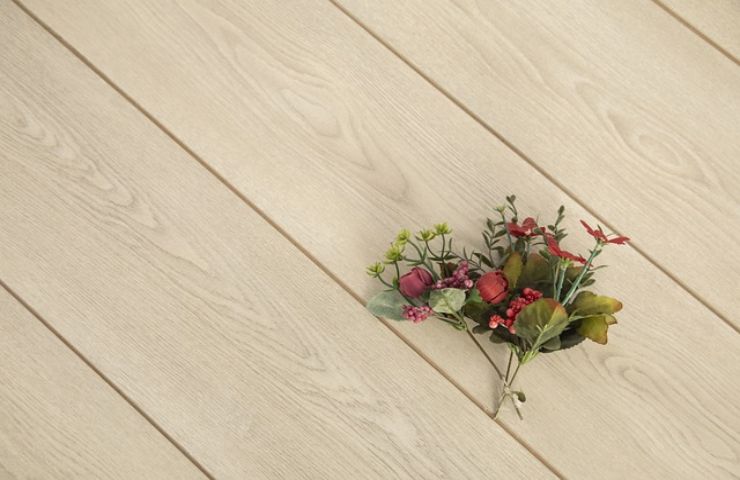
Prevention , in fact, is the best thing to keep it beautiful and healthy over time. So when you clean it, the cloth should never be too wet, but simply damp .
Temperature and humidity
If the house you live in has parquet, but is also particularly humid, to prevent the wood from swelling and lifting it is necessary to use a dehumidifier and air the rooms several times a day.
Furthermore, it is important, during the winter months, to maintain a constant temperature inside the house that goes from 19 to 20 ° . As well as the humidity that should not be higher than 45% . Limits not to be exceeded , after all, also for the health of those who live there.


