
Enjoyed as a dessert, jam or sorbet, strawberries are one of the lowest-calorie fruits. Very rich in vitamin C, these red fruits are popular for their juicy pulp, their exquisite fragrance and their sweet-sour taste. To enjoy this succulent fruit for a long time, discover 7 common but different methods for preserving strawberries.
What is the best way to store strawberries?
There are several methods for preserving strawberries. Some are more preferred than others. But the method that won the prize was the white vinegar solution. Strawberries were able to maintain their freshness for up to a whole week! Read on to learn about all the possible methods for preserving strawberries.
Storage method 1: Hulled strawberries are stored in the refrigerator
This method consists of peeling the strawberries and placing them in a container with the cut side facing down. The strawberries were stored in the refrigerator, without closing the container.
Result: By peeling strawberries in advance, the cut tips become soft and brown. This damages and dries out the strawberries.
Storage method 2: Strawberries are soaked in hot water and stored in an airtight container

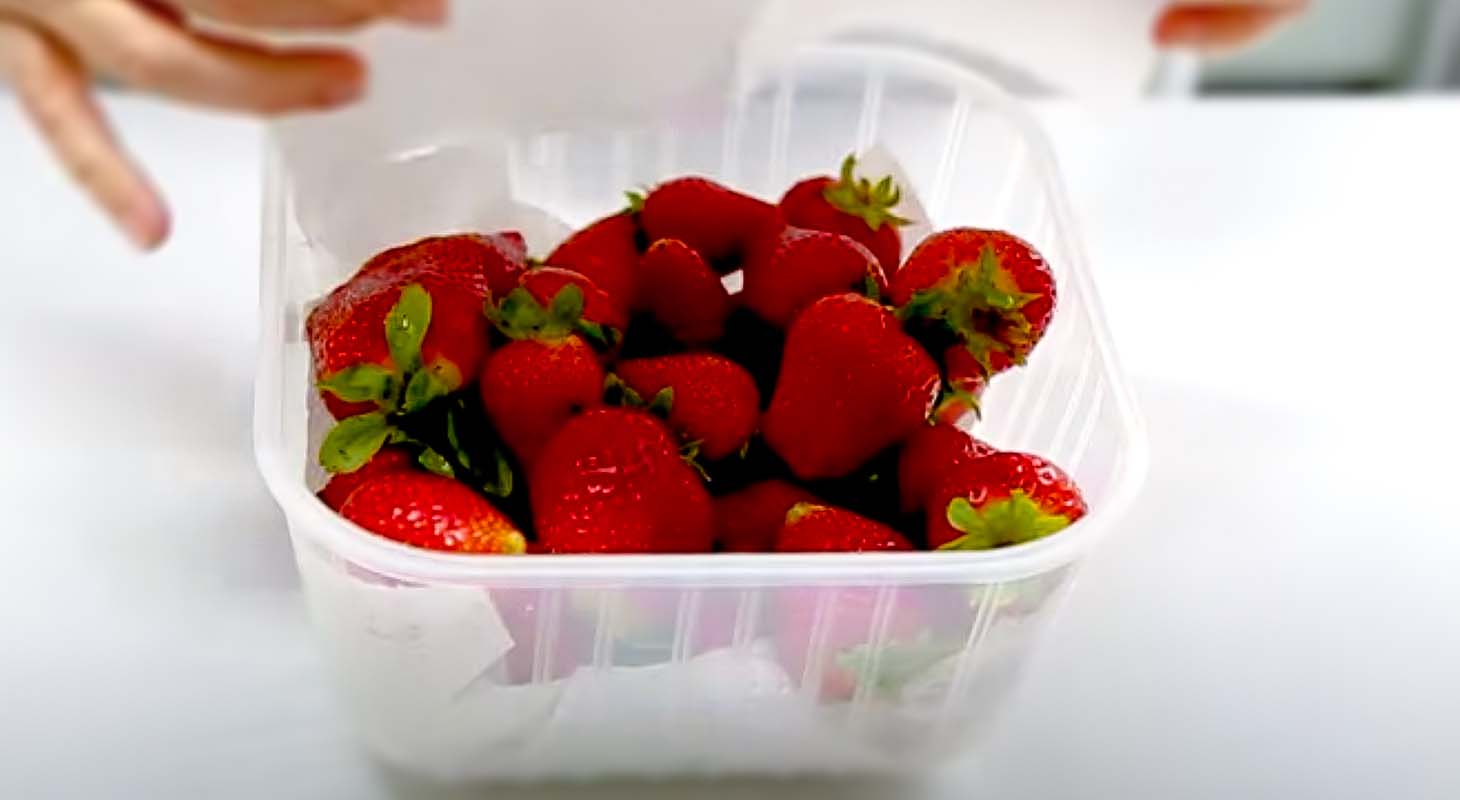
Strawberries are dipped in hot, but not boiling, water (about 50°C) for 30 seconds. According to food researcher Harold McGee, it is best to wash strawberries in hot water, as this destroys mold spores on the surface of the strawberries and heat-sensitive bacteria.
Dry the strawberries and place them in an airtight container lined with paper towels.
Result: After a week of storage, not all strawberries remain fresh, especially if they are not dried well.
Storage Method 3: Strawberries are rinsed and stored in an airtight container.
This method involves rinsing the strawberries in clean water and then storing them in a container lined with paper towels. Then cover the container tightly and place it in the refrigerator. This way you can enjoy the strawberries without having to rinse them again.
Result: After 7 days, you risk finding the paper towel wet. Its moisture affects the quality of the strawberries, which spoil quickly. So always make sure that the strawberries are completely dry before refrigerating them.
Tip: If you decide to wash your strawberries, do so with the tails on. Do not remove it so as not to soak them with water. Your strawberries could therefore be damaged quickly.
Storage method 4: Strawberries are stored in airtight glass jars
You can store fresh, unwashed strawberries in an airtight glass jar, such as a Mason jar. Screw on the lid and store the jar in the refrigerator.
Result: The strawberries remain mostly fresh. The strawberries at the bottom of the jar, however, spoil more quickly. Also, this method can make it difficult to get the strawberries in and out of the jar. Plus, the whole pint of strawberries may not fit in the jar.
Storage method 5: Unrinsed strawberries are stored on absorbent paper
The goal of this method is to test whether strawberries stay fresh on paper towels. To do this, you should experiment with this method with rinsed strawberries as seen above, and with unrinsed strawberries. Then place the fresh strawberries in a container, lined with paper towels, then close it. Store your container in the refrigerator.
Result: The paper towel absorbs a good amount of the liquid from the strawberries that would have contributed to their deterioration. In fact, you can notice red spots on the paper towel. Not rinsing the strawberries helped keep them fresher for longer. In addition, it is advisable to wash the strawberries only before eating them. Washing exposes the strawberries to moisture and this is what encourages the development of mold.
Preservation method 6: Strawberries are sorted and placed in their original tray
This preservation technique does not require much effort. Purchased strawberries are sorted to separate the fresh ones from the spoiled ones. The fruits are returned to their tray and stored in the refrigerator.
Result: Most strawberries stay fresh and in good condition for a week. The strawberry container keeps the fruit much fresher than most other storage containers. It provides better air circulation. Not rinsing the strawberries protects them from moisture and increases their shelf life.
Please note that the refrigerator is still the best place to store strawberries and keep them fresh at a temperature below or equal to 4°.
Preservation method 7: Strawberries are soaked in a white vinegar solution.
This method is the most highly rated so far. It is also the most common.
- The strawberries are soaked in a container composed of one part white vinegar and three parts water;
- Let it sit for a few minutes. White vinegar will kill mold spores and bacteria that could cause strawberries to spoil more quickly;
- Rinse the strawberries and drain them to dry. You can do this using a salad spinner, lined with absorbent paper;
- Once dry, store the strawberries in an airtight container, covered with absorbent paper;
- Cover the container without sealing it completely and store the strawberries in the refrigerator.
Bottom line: This method requires a little more effort, but it’s the most effective at keeping strawberries fresh for up to a week, especially if they’re carefully dried. Your paper towel will remain dry even after a week. If you’re worried about your strawberries retaining a vinegary taste, simply rinse them thoroughly. This will keep their flavor.
Frequently Asked Questions
Can you freeze strawberries?
To enjoy this fruit all year round, here’s how to proceed:
- Choose strawberries that are in good condition, neither too soft nor too hard. Damaged or discolored strawberries should be discarded;
- Wash the strawberries and then peel them;
- Dry them properly, as moisture can affect their shelf life, and spread them out on a cookie sheet so the strawberries don’t stick together. Put the strawberries in the freezer. After a few hours, your strawberries will be frozen, so you can store them in freezer bags or an airtight container. Be sure to suck the air out of the bags before sealing them.
Frozen strawberries are used to make smoothies and cocktails. You can also use them in muffins.
Bonus tip: To defrost strawberries, simply put the amount you want to use in an airtight container and leave it in the refrigerator for a few hours. If you’re in a hurry, place your container in a bowl of warm water.
How to preserve cut strawberries?
Cut strawberries should be stored in an airtight container lined with paper towels to prevent the pulp from drying out and bacteria from growing. It’s a good idea to place them cut side down. Keep in mind that once cut, strawberries keep for less time than when they’re still whole. In fact, according to the Food and Drug Administration (FDA), when you cut a fresh fruit, you break its natural outer barrier, which increases the risk of bacterial growth and contamination.
Cut strawberries should be consumed within 2 hours of preparation or stored in the refrigerator. The container should be sealed.
Additionally, it is best to store whole strawberries in the crisper drawer of the refrigerator or another cool place.
How to wash and clean strawberries?
Before eating your strawberries or incorporating them into your preparations, you must first wash them. Here is the method to follow:
- First, wash your hands for 20 seconds with warm water and soap. This should be done before washing the strawberries and even afterward;
- Cut off any damaged parts of the strawberries and gently scrub the fruit under running water. You can use a product such as white vinegar to clean your fruit.
- Dry the strawberries with a paper towel.
Remember that strawberries should be washed just before eating, as water increases moisture and causes spoilage.


