
The candle trick is explained by cleaning professionals: goodbye to limescale with just one simple gesture.
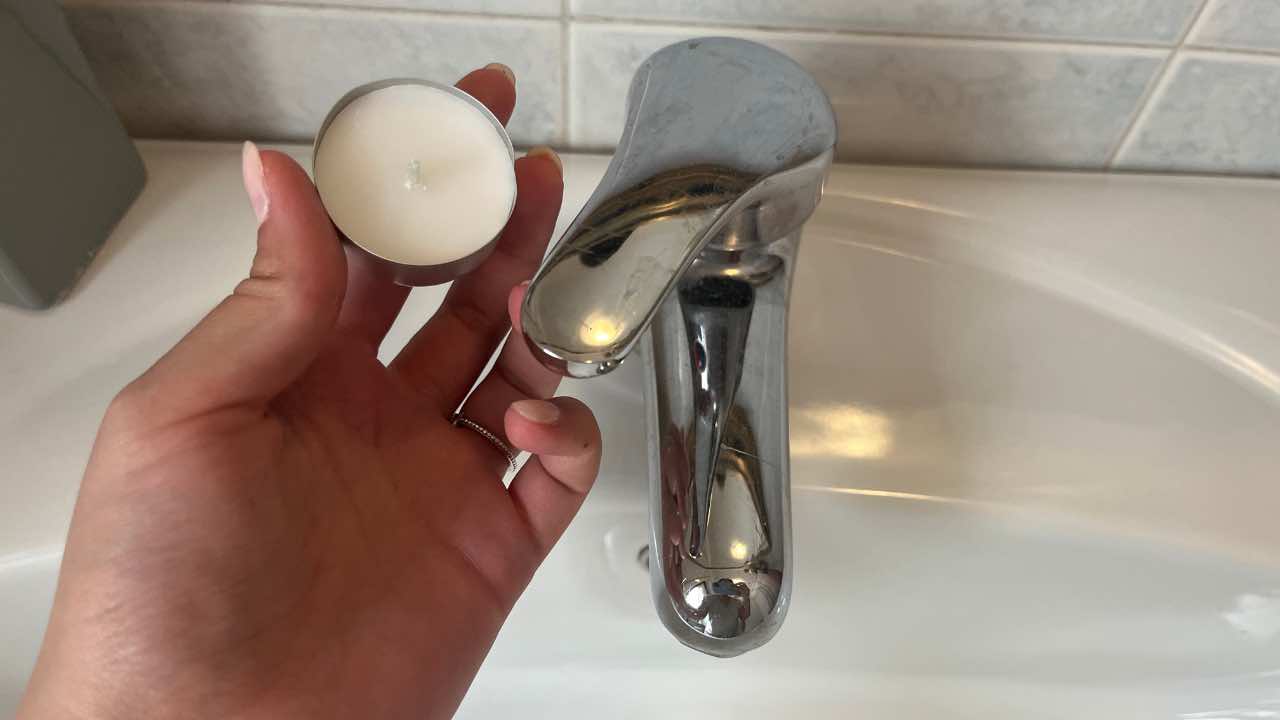
How many times does limescale take up space and embrace all the taps in the house? There are many natural methods to eliminate it, but the candle is the oldest and worth trying. A great ally discovered by chance and now used to act as a barrier against limescale. Let’s find out together how to use it?
How Limescale Forms: The Causes
Limescale on faucets is a common problem that affects many homes. The presence of whitish or yellowish deposits on the surfaces of faucets can compromise not only the aesthetics of our sinks and showers, but also their proper functioning over time.
One of the main causes of limescale buildup on faucets is hard water. Hard water contains high concentrations of minerals such as calcium and magnesium. During daily water use, these minerals can build up on the surfaces of your faucets, creating layers of limescale that can be difficult to remove. The harder the water, the more likely it is to form.
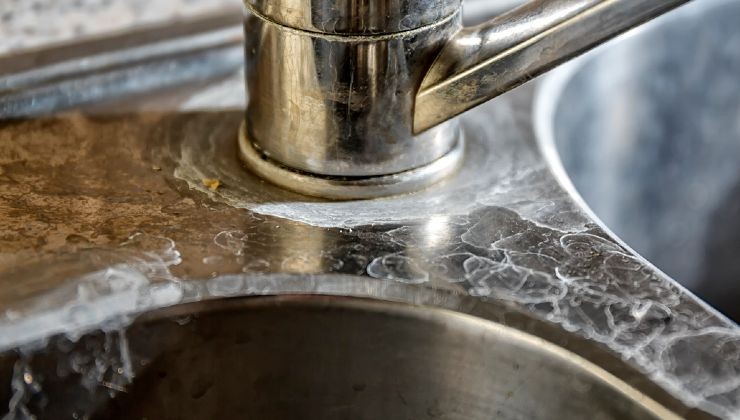
Another factor that contributes to the formation is the accumulation of residues from soap and other personal care products. These residues can mix with the minerals present in the water and create a solid compound that settles on the faucets. In addition, the presence of humidity and variable temperatures in the faucet areas favor the proliferation of bacteria and fungi, which can accelerate this process.
Failure to clean your faucets regularly can also contribute. If you don’t remove deposits in a timely manner, they will gradually build up and become more difficult to remove. Additionally, using inappropriate or abrasive cleaners can damage faucet surfaces and increase limescale buildup in the long run.
Candle trick to remove all traces
Fortunately, there are effective solutions to combat limescale buildup on taps. First, it is advisable to use water filters or softeners to reduce the presence of minerals in the water we use.
However, there is an unusual but effective remedy to combat limescale: candle wax.
First, it is important to understand how candle wax works to combat this formation. The wax creates a thin, protective film on the surfaces of the faucets, preventing the accumulation of limescale deposits. This protective layer also makes subsequent cleaning easier, reducing the effort required to remove the limescale.

To apply the wax, light a white unscented candle and let it burn for a few minutes, so as to obtain a small amount of melted wax. Then, blow out the candle and wait for the wax to cool slightly, but without solidifying completely. At this point, gently rub the wax on the surface of the faucet, completely covering all the affected parts.
After applying the wax to the taps, we let it harden completely. The wax will form a thin, transparent film on the surface of the taps, offering protection against limescale formation.


