
There are many garden lovers, but not all of them know the method that we will explain in this article, which consists in the absence of water to make the plants grow.
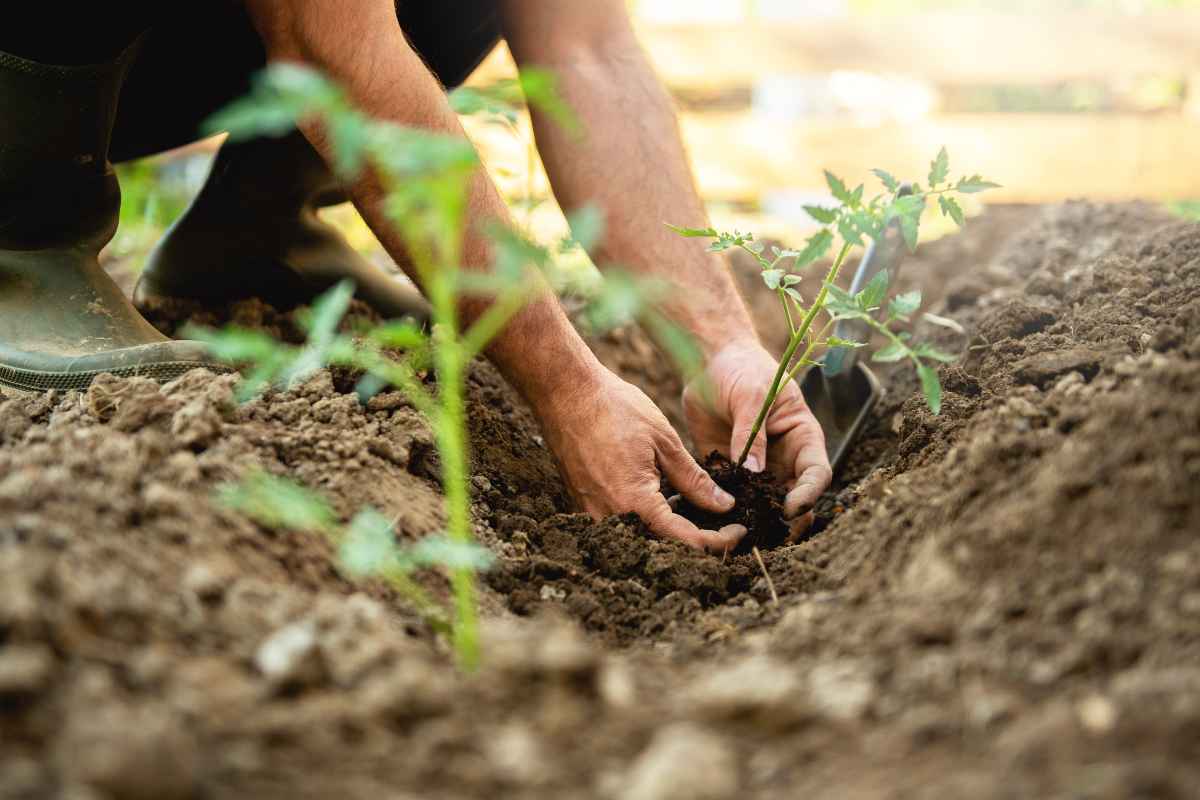
You understood correctly, the element that we all believed was fundamental to growing a good vegetable garden, can actually be replaced.
This guide will certainly be of interest to many, in fact the advice for growing a good vegetable garden is becoming very popular and this has become a hobby that unites many people of different age groups. There are even those who create them at home , not having an outdoor space.
But how can we exploit the innovative Fukoka method , which consists precisely in removing the water?
Who is Fukoka?
Let’s start by giving some clarifications about who Fukoka really is. Perhaps most people have no idea but he is a famous Japanese botanist and philosopher, a pioneer of an agriculture called “of not doing”.
Fukoka, who passed away in 2008, has always been interested in natural agriculture , that is, the one that does not need many artifices but that develops simply thanks to Mother Nature and the substances present in the soil. Already at 25 years old, the biologist began to question the preconceptions of agriculture, that is, the same ones that we all do not know.
For this reason he began to develop his own cultivation model, organic and eco-friendly. His research had the objective of minimizing human intervention and therefore eliminating agricultural techniques .
Strongly linked to Buddhist philosophy, Fukoka has always embraced the thought of this belief, according to which, the universe is in continuous change and does not need the hand of man . In fact, everything happens spontaneously and for the biologist, even cultivated products are able to sustain themselves.
The Fukoka Method
The greatest expression of the work carried out by the scientist is precisely the agricultural method that bears his name and that we are going to explore today. This modus operandi faithfully reproduces the conditions that he himself defines as natural.
Fukoka’s school of thought is followed by many, even today they follow his method, which is also interesting farmers who work the land in a traditional way.
In short, the soil is not prepared by plowing before planting and germination occurs on the surface, after the seeds have been mixed with clay (only if necessary). Among the basic principles of his theory is that of not using pesticides at all, rather we can introduce antagonistic species .
Then again, do not weed and do not prune (if we are talking about fruit trees). In fact, as much as possible of what is produced should be returned to the soil, material that will serve as mulch. In this way the soil is always covered and does not erode or become impoverished.
But certainly the most revolutionary aspect is that of eliminating water. In short, we are going to do the complete opposite of what we have been taught, so no treatment of the soil, no pruning, no elimination of insects and apparently, no irrigation .
The techniques explained so far in fact ensure the sustenance of our garden plants, this is the famous concept of self-sufficiency of nature studied by the philosopher during his life. In fact, this is able to develop and reproduce even without water , as long as the other necessary measures are respected.
In short, a flourishing and economical vegetable garden at any time of the year, try it and believe it!


