
Did you know that you solve the problem of yellow leaves on the mother-in-law’s tongue with a specific thing? This is what you need to do to revive this plant and give it lush growth!
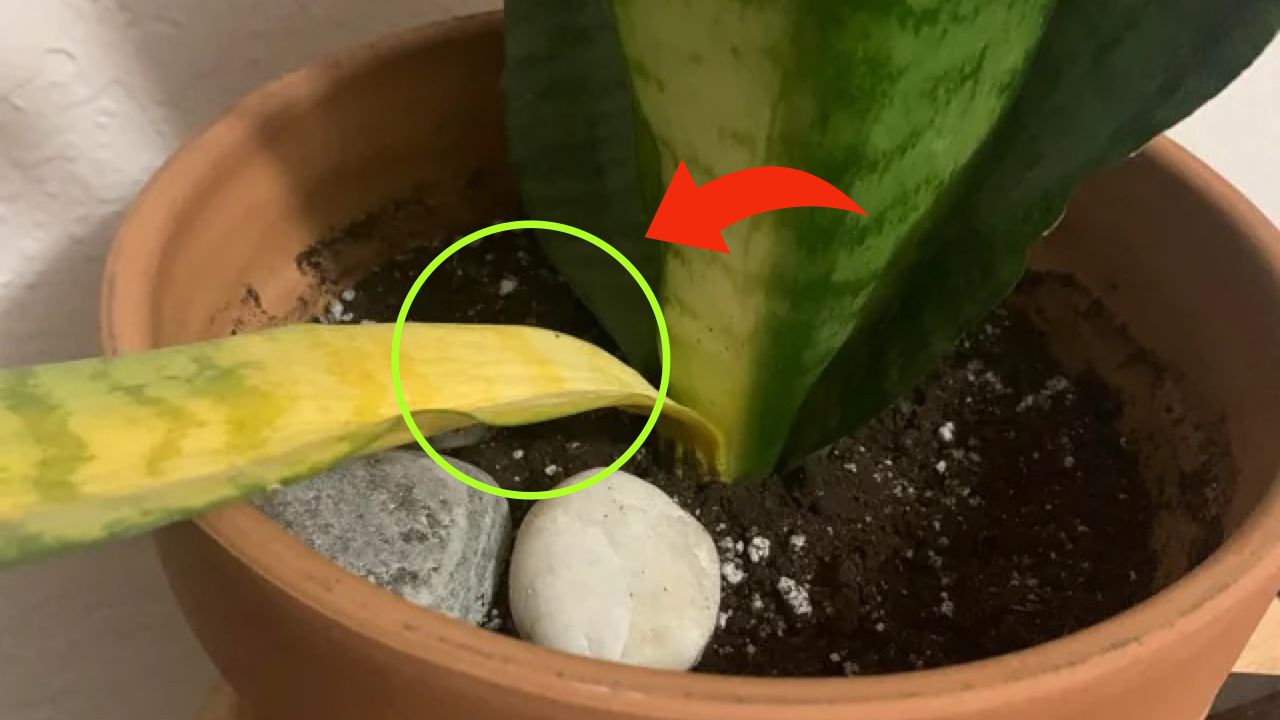
Does your mother-in-law’s tongue have yellow leaves and are you afraid she will die? Don’t worry, there is still a remedy and you can save the plant from a bad end. So let’s find out what needs to be done in order for the mother-in-law’s tongue to last for a long time, which, despite its curious name, is a beautiful and decorative plant.
Sansevierias were not the mother-in-law’s language
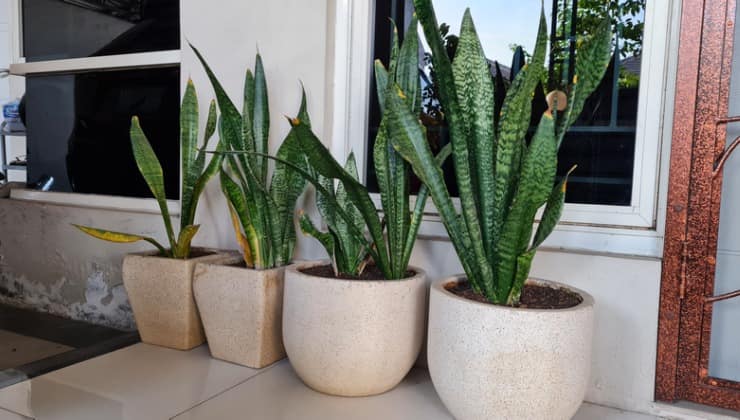
Sansevieria, known as mother-in-law’s tongue, is a beautiful and decorative plant that got its special name from its tall and sinuous leaves that actually look like tongues . Ideal to have in the apartment but also in other places, it withstands high temperatures and hates the cold .
It does not need excessive maintenance to grow well, just a few small adjustments that will allow you to achieve great results. Something that usually happens is the appearance of yellow leaves, let’s see how to prevent it and what to do.
Clean the yellow leaves.
When the leaves turn yellow, the main reason can be insect infestation and parasites . Another reason could be that they don’t absorb enough light , or they are simply dirty.
A good solution to this problem is to prepare a mixture of water and Marseille soap and clean the leaves by soaking a cotton ball.
With a single swipe, you will eliminate any parasites and the leaves will shine again, as dirt will also disappear. Do it once a week or every 15 days .
Do not overwater the plant
Yellowing of leaves can also be caused by excessive watering. This can happen when it is warmer and you try to help the plant by adding more water, but this should not be done. If you notice that there is excess water, do not add more for a few days and let the soil dry out .
To avoid mistakes, water the plant when there is no more moisture in the soil , otherwise wait again. Also, pay attention to the water left in the saucer, because if it stagnates, the roots could mold and the plant could die.
Protect from wind
Mother-in-law’s tongue must be protected from the wind, otherwise the leaves may turn yellow . In fact, in this case the plant would suffer and the yellow leaves are an alarm that something is wrong.
Wind or drafts are difficult for this plant to tolerate , and if it is placed outside, care must be taken to keep it indoors in case of drafts. This device does not even accept sudden current inputs and prefers to remain protected and safe .
Transplant mother-in-law’s tongue and fertilize it
To have mother-in-law’s tongue with nice tall leaves, it needs to have enough room to grow. You need to check that the roots can develop well and that there is room for expansion in the pot. It is important to understand if there is not enough space, because this would cause the plant to suffer and cause the leaves to turn yellow.
If it is necessary to transplant it, perform this operation in the spring and in any case every two years to always leave the mother-in-law’s tongue the space it needs to develop. In addition, do not forget to fertilize the plant as well, although many say that succulents do not need it.
This is not true at all, and in the case of Sansevieria, the yellowing of the leaves could be due to poor nutrition. So if you apply fertilizer, the plant will be able to have the necessary food to keep the leaves green and beautiful.
The ideal fertilizer is a mixture based on potassium, phosphorus and nitrogen . Natural fertilizers are also excellent, and among the best you can use those based on coffee grounds, which contain all the necessary nutrients for the lush growth of the mother-in-law of the tongue.


