
Aphids, moths and mites are some of the most well-known pests that threaten the ornamental and vegetable beds of our gardens, as well as fruit and shrub crops. We will advise you on how to recognise the signs of infestation by these pests and how to effectively protect yourself from them.
The most famous pest is aphids.
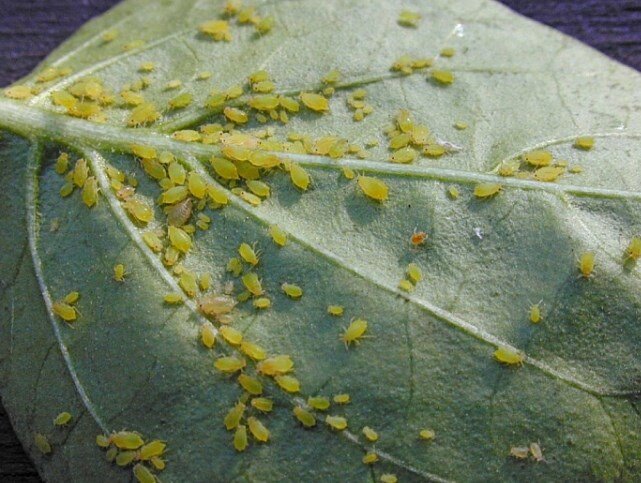
Aphids are probably one of the most well-known pests because these insects are harmful to almost all cultivated plants. It is a small insect that measures 2 to 6 mm and has a complex development cycle.
After fertilization, the female lays eggs in the fall, which hibernate and develop into winged females in the spring. They then fly over vegetation and subsequently reproduce parthenogenetically (asexually). The unfertilized eggs then develop into larvae, which then develop into wingless adults. Aphids are also common among aphids, allowing colonies to multiply very quickly. Most generations do not have wings, only some of them have wings, for example, in search of new plants.
Aphids are damaged by sucking in large amounts of liquid, and subsequently the plants respond by twisting, curling the leaves, or even changing the color of damaged areas. Some species cause galls. The damaged areas are also covered in honeydew, secreted by aphids. Honey is an important part of ants’ diet, which as a “counter-service” provides aphids with protection from predatory insects and parasites. Aphids are also important vectors of some viral diseases, such as potatoes, cucumbers or ornamental plants.
Protection against aphids
The natural enemies of aphids are, for example, ladybugs, golden-eyes and hoverfly larvae. Some insecticides can be used as chemical protection.
Whiteflies – moths
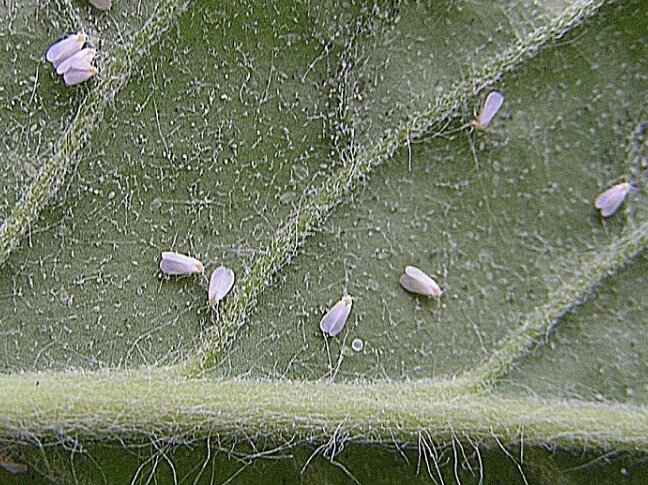
Moths are very small, 1 to 2 mm in size, yellowish in color, whose wings are covered with white wax scales. The white color of the wing cover gives the impression that the insect is completely white.
Adults and nymphs suffer suction on the underside of the leaf, where we can also find black moth eggs when inspecting the plants. They prefer to be in greenhouses or foil warehouses and are mainly harmful to plantations of ornamental plants, peppers and tomatoes. Under normal conditions, pests cannot overwinter, but they can survive in plants or greenhouses that have overwintered.
Insidious Tweezers – Tweezers
Spider mites are mites that can cause serious damage to plants. Common pest in greenhouses and apartments, especially in hot, dry climates. The source of the disease is mainly females or wintering eggs. Pests are not visible to the naked eye (their length is about 0.4 to 0.6 mm).
The first symptoms of the disease first appear on the leaves. There are lighter spots with yellowish dots in the middle, the leaves lighten, take on a silvery color, then turn rusty brown and dry out. A fine network can form at the bottom. Subsequently, the flowers are also attacked.


